







Composite that doesn't come apart
3D woven structural carbon plates, CNC-cut to your drawing.

Organisations we have worked with








Crack growth in a 2D laminate and a 3D weave
In a 2D laminate a crack runs along the resin line between layers and the layers separate. In a 3D weave, Z yarns bind the layers through the thickness; the crack stops at the first Z yarn.
A crack starts at the edge of both plates. In the 3D weave, Z yarns through the thickness stop the crack. In the 2D laminate, the crack runs between the layers and the layers separate.
-
Around holes
No cracking around holes, so bolts can sit close to the edge.
-
After impact
Impact energy spreads through the whole structure, so parts don't snap.
-
Machining
Machines like metal on CNC and waterjet, with clean edges.
-
Repeated missions
With no separation between layers, wear under vibration and repeated loads is lower than in a 2D laminate; parts last longer in repeated missions.
The corner joint of a T profile
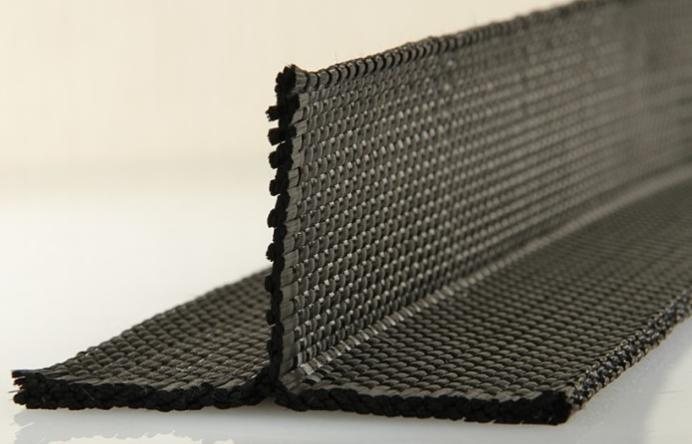
In a hand-laid T profile two L plies sit back to back, and under the corner the plies cannot meet: a triangular gap remains, known as the noodle. Under a pull-off load the crack starts there. In 3D weaving the web, corner and base are woven as one piece and the corner is filled with fibre.
The plies are laid: two L plies and a base in 2D, one woven piece in 3D. In 2D a noodle gap remains under the corner; in 3D the corner is filled with fibre. Under the same pull-off load the 2D crack starts at the gap; in 3D web and base carry the load together.
T, Π and H profile typesTest values
Tensile strength and flexural modulus values are test results on 3D woven RTM specimens.
- Tensile strength
- 813–993 MPa 3D weave + RTM
- Flexural modulus
- 94–107 GPa 3D weave + RTM
- Density
- ≈1.60 g/cm³ Approximate value
- Glass transition temperature (Tg)
- 140 °C VARTM-moulded plate
Product groups
-
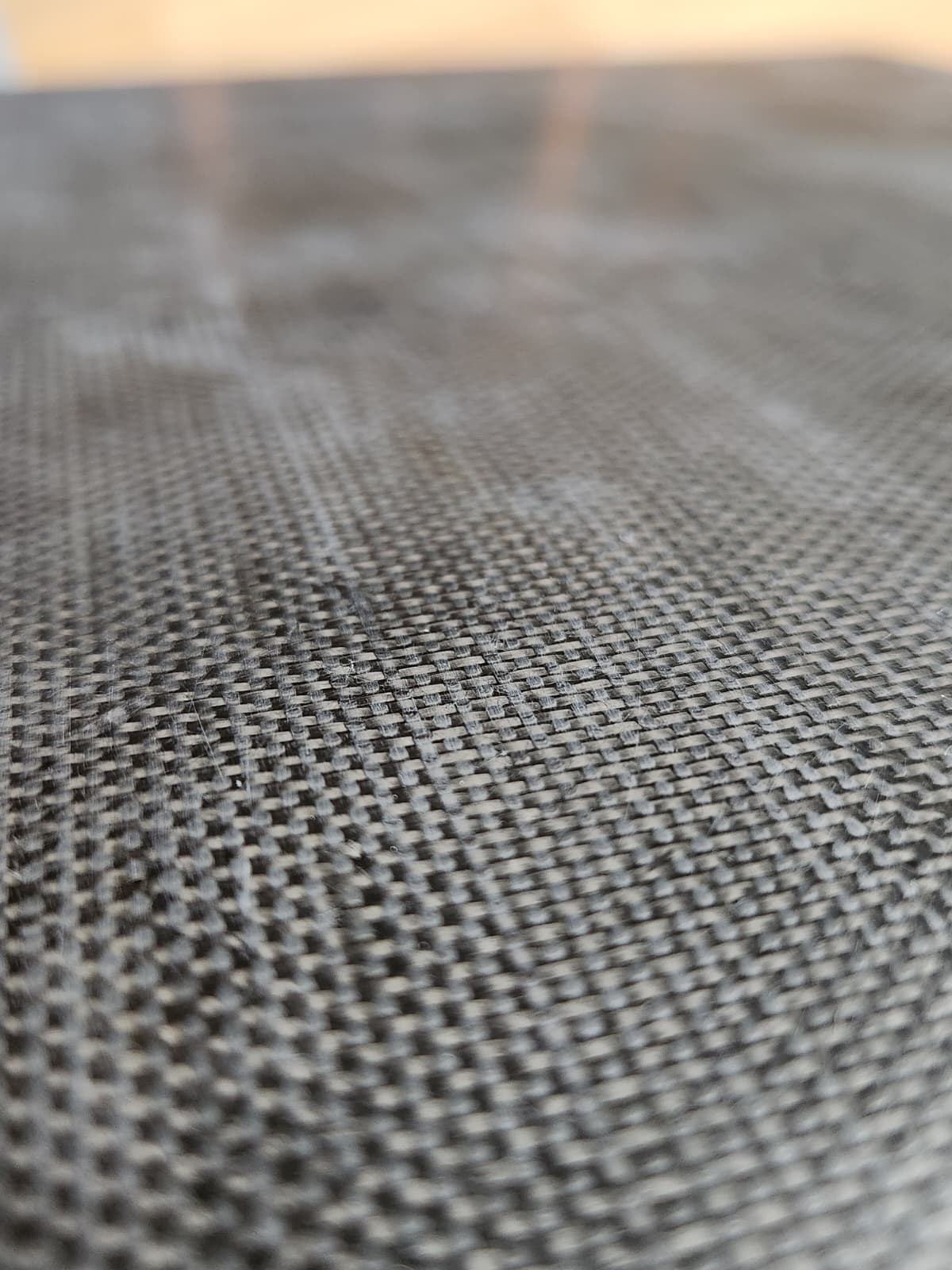
Full plate
Structural carbon plate, 500 × 250 × 6.5 mm, Tg140
For R&D teams that cut on their own CNC and prefer not to share their design.
$605 (export price, no VAT)
-
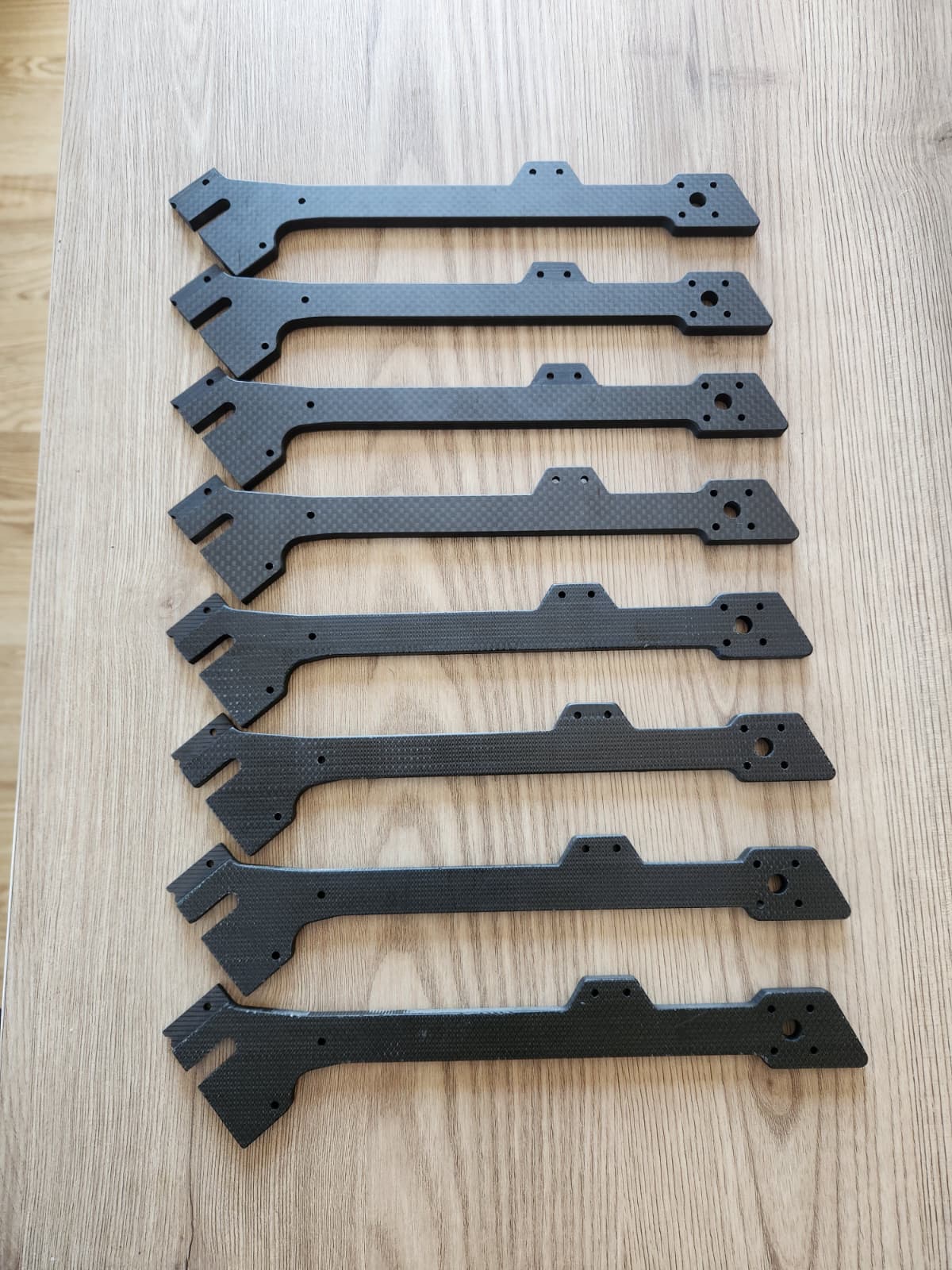
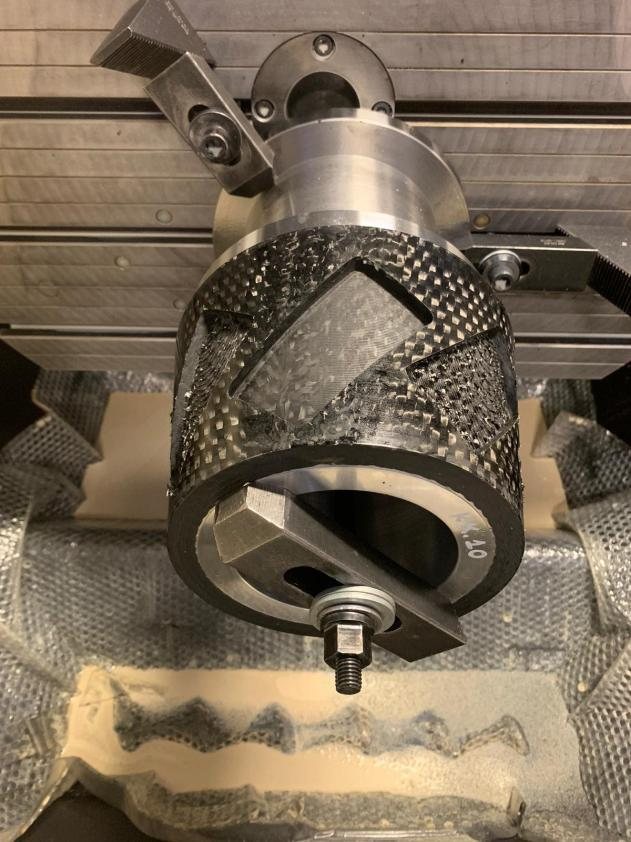
Composite cutting (CNC)
Parts CNC-cut to your drawing
The part is cut from 3D woven plate and shipped; the price follows the plates used.
Price on request
-
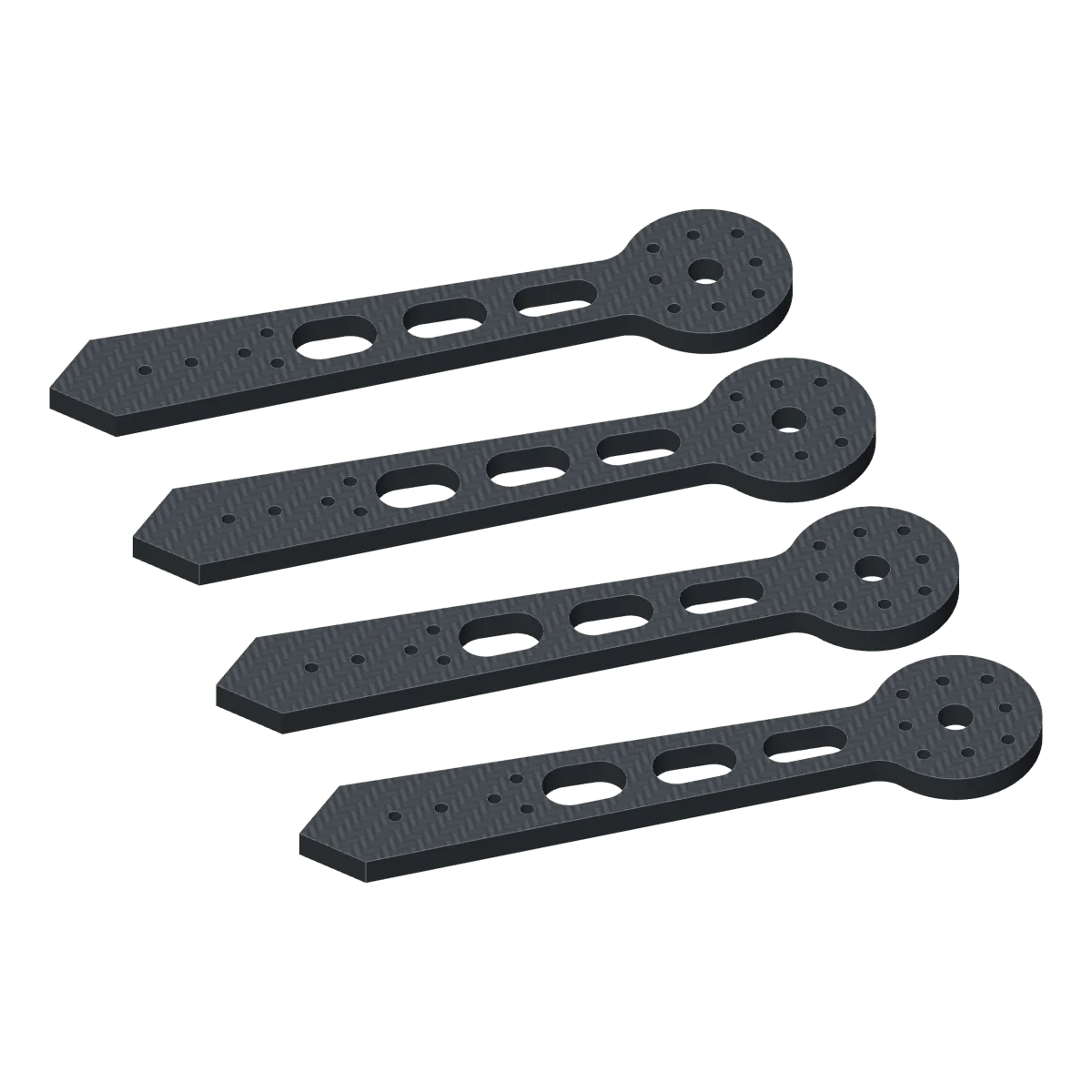
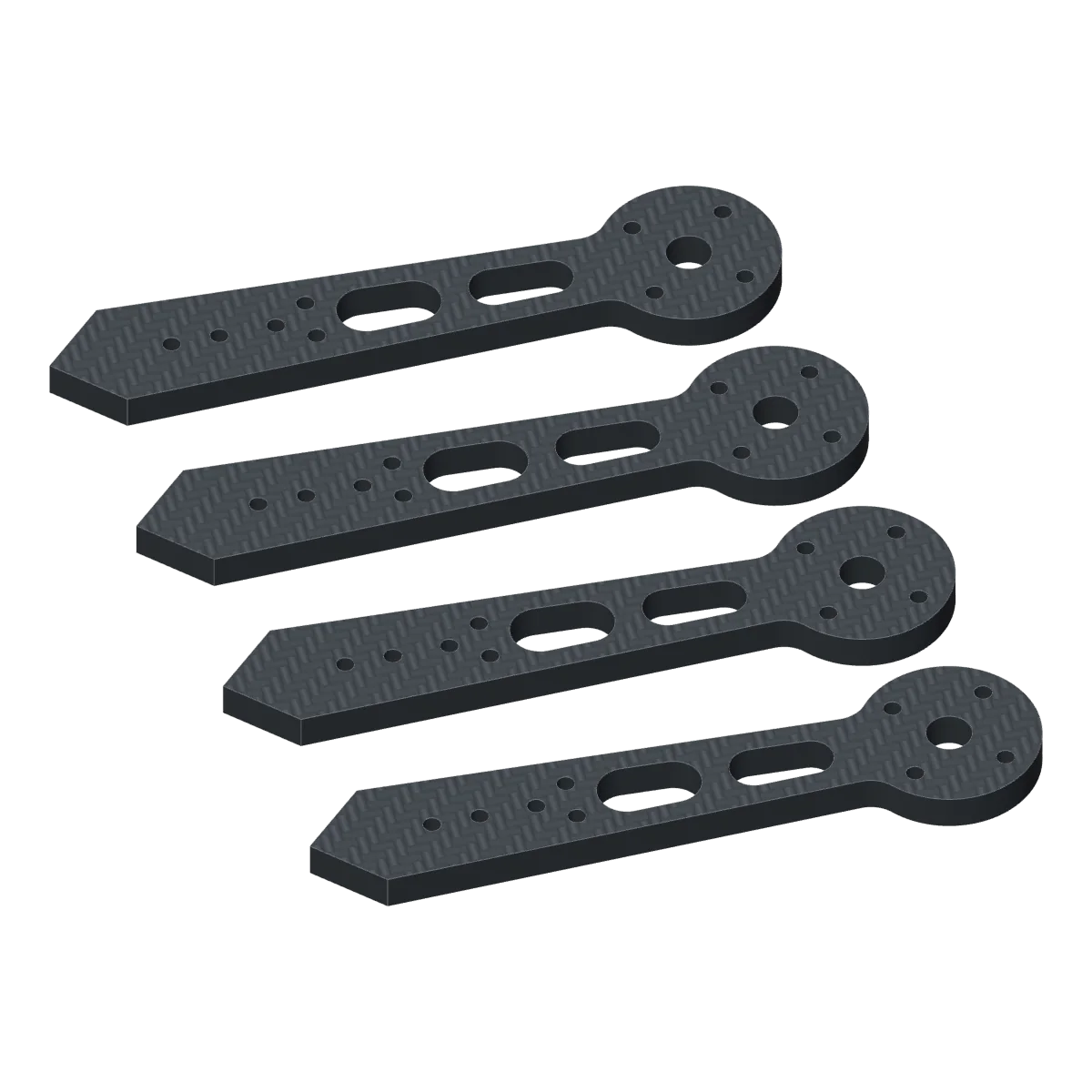
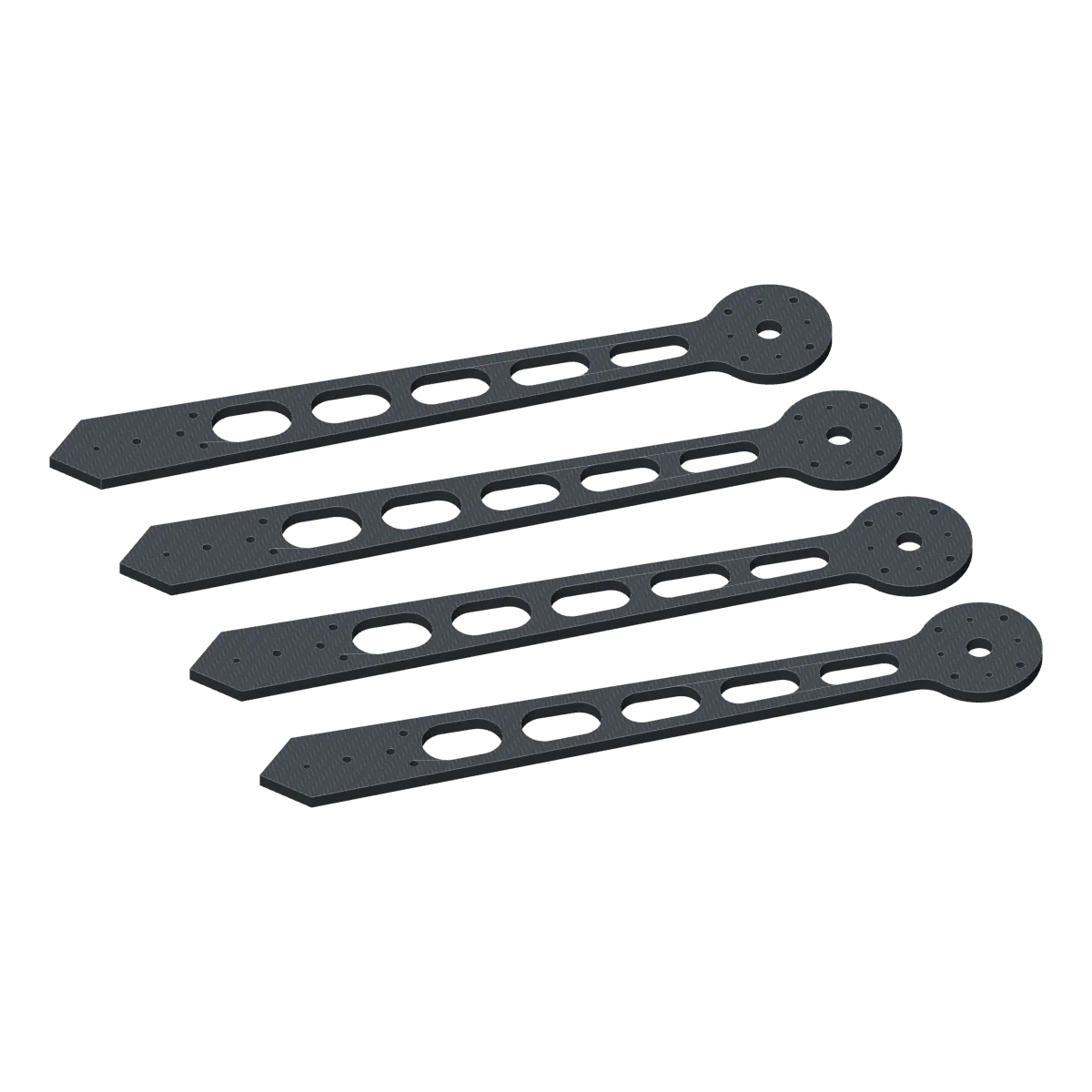
Ready-made drone arms
5, 7, 9, 10, 12 and 15 inch; set of 4
Arms for FPV, long-range and heavy-lift drones that damp vibration and impact and make PID tuning easier.
Price on request
-
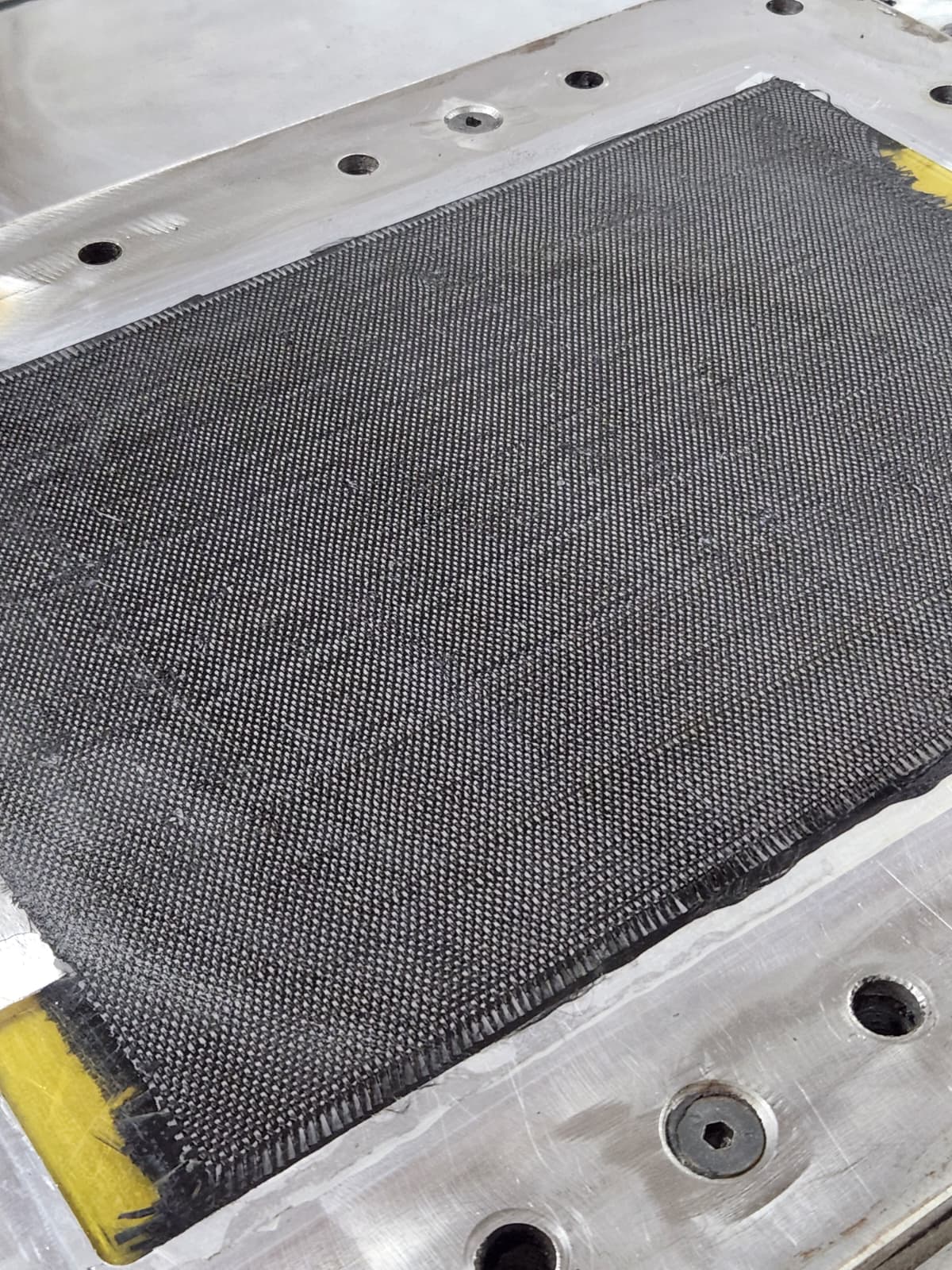
Sample kit
3 small rectangular plate pieces and a datasheet
For teams that want to try the material before ordering.
Price on request
Our products are made with OWC. What is OWC?
How ordering works
-
Choose a product or upload your drawing
Plates, sample kits and drone parts are in the shop; your drawing is all a custom cut needs.
-
See the price
Catalogue prices are on each product page; a cutting price is calculated as soon as the drawing is uploaded.
-
Pay by link
Once the order is approved, a PayTR payment link is emailed to you; payment is made by card.
-
Track the shipment
The tracking number is sent to you by email.
Material comparison
Numerical values are sourced; the other rows are a qualitative comparison.
| Property | 3D weave (OWC) | 2D twill (plain-weave prepreg) | UD prepreg | Al 6061-T6 |
|---|---|---|---|---|
| Tensile strength (MPa) | 813–993 | 420–454 | 718–819 | 310 |
| Flexural modulus (GPa) | 94–107 | 39–41 | 82–91 | 68.9 elastic modulus |
| Density (g/cm³) | ≈1.60 | No sourced value | No sourced value | 2.70 |
| Delamination | Does not occur; Z yarns bind the layers | Risk of separation along the resin line between layers | Risk of separation between layers | No layered structure |
| Around holes | No cracking at holes near the edge | Risk of layer separation around holes | Risk of splitting along the fibres | Isotropic; edge distance rules apply |
| After impact | Damage stays local; no sudden failure | Internal delamination, lower compressive strength | Internal delamination and fibre splitting | Permanent deformation (denting) |
| CNC edge quality | Clean edge, no fraying | Risk of fibre breakout and fraying at the edge | Edge splitting depending on fibre direction | Clean edge; needs deburring |
- Composite values: results of the same test series (3D weave + RTM, UD prepreg, plain-weave prepreg).
- Al 6061-T6: ASM Aerospace Specification Metals, 6061-T6 material data sheet (tensile strength 310 MPa, elastic modulus 68.9 GPa, density 2.70 g/cm³).
- OWC density is an approximate value.
Where it is used
The product group that fits each field: ready-made arms, full plate, composite cutting or custom production.
-
FPV freestyle and racing
Arms whose layers do not separate, for 5 and 7 inch builds that crash often.
5-inch arm -
-
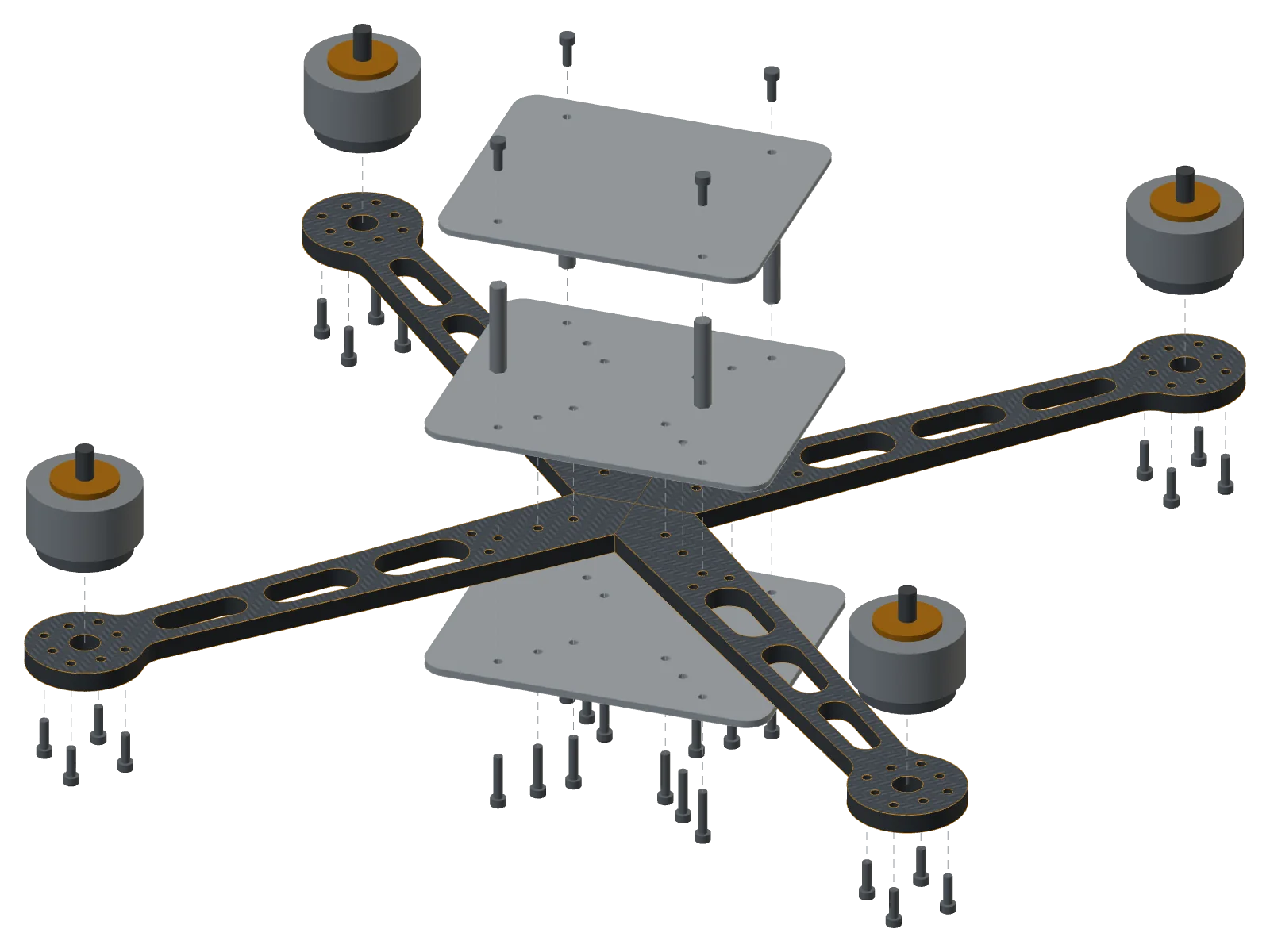
Industrial inspection and mapping
Arms for 9–12 inch inspection and mapping drones carrying a camera or LiDAR.
9-inch arm -
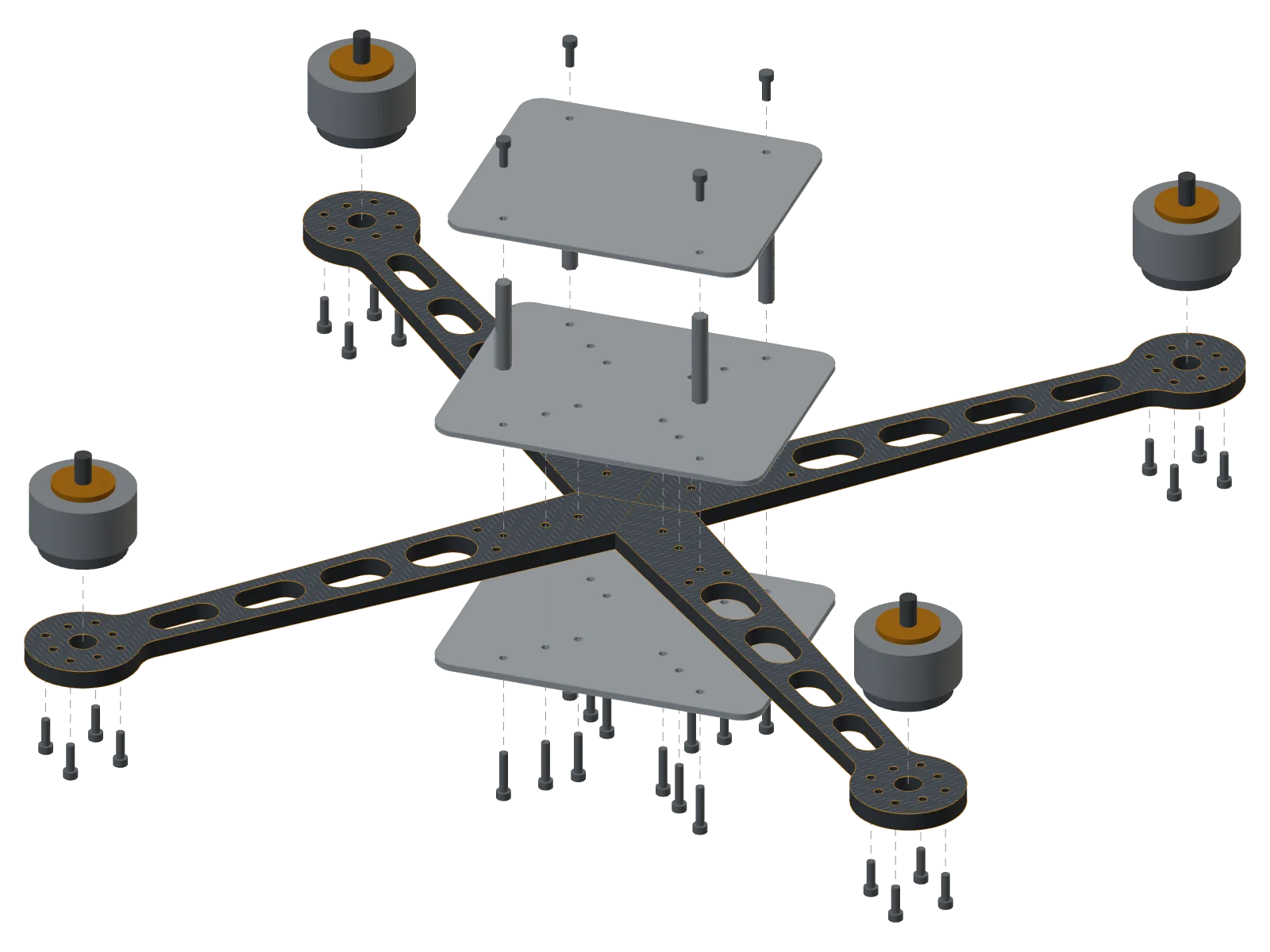
Search and rescue
10–15 inch arms for the thermal-camera UAVs of volunteer search and rescue teams such as AKUT; their layers do not separate on impact.
10-inch arm -
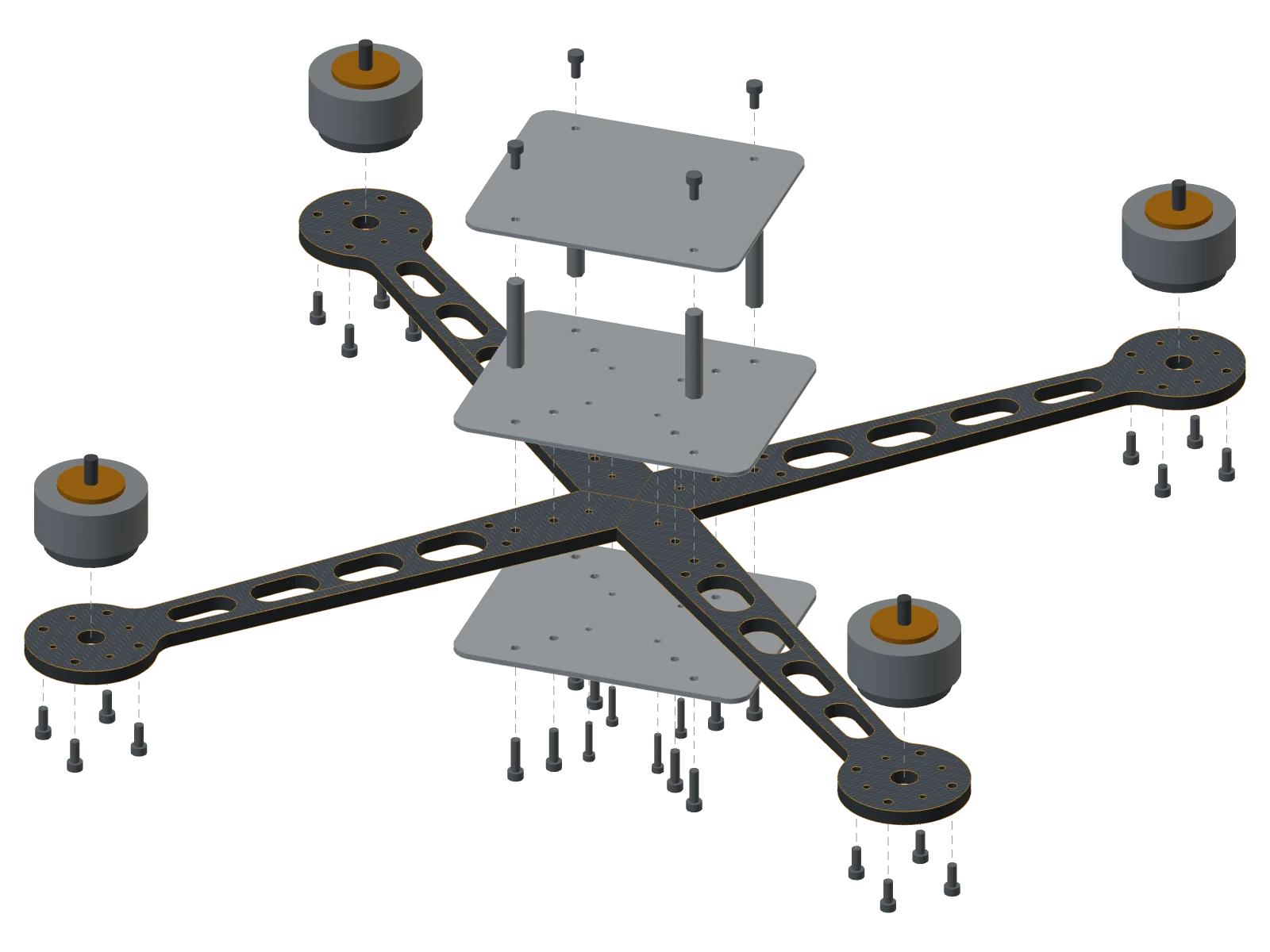
Cinelifters and heavy cameras
Arms for 9–15 inch platforms carrying cinema cameras; custom body parts are cut from the full plate.
12-inch arm -
Crop spraying and monitoring
12–15 inch arms are for monitoring and light spraying prototypes; body parts for large spraying UAVs are cut to your drawing.
15-inch arm -
Cargo and delivery prototypes
Load-carrying body and bracket parts are made from the full plate or cut to your drawing.
Composite cutting -
University and Teknofest teams
Full plate and cutting to your drawing for competitions and thesis work.
Composite cutting -
Defence and aerospace R&D
Full plate and composite parts woven in one piece to your design; NDA on request.
Custom production